

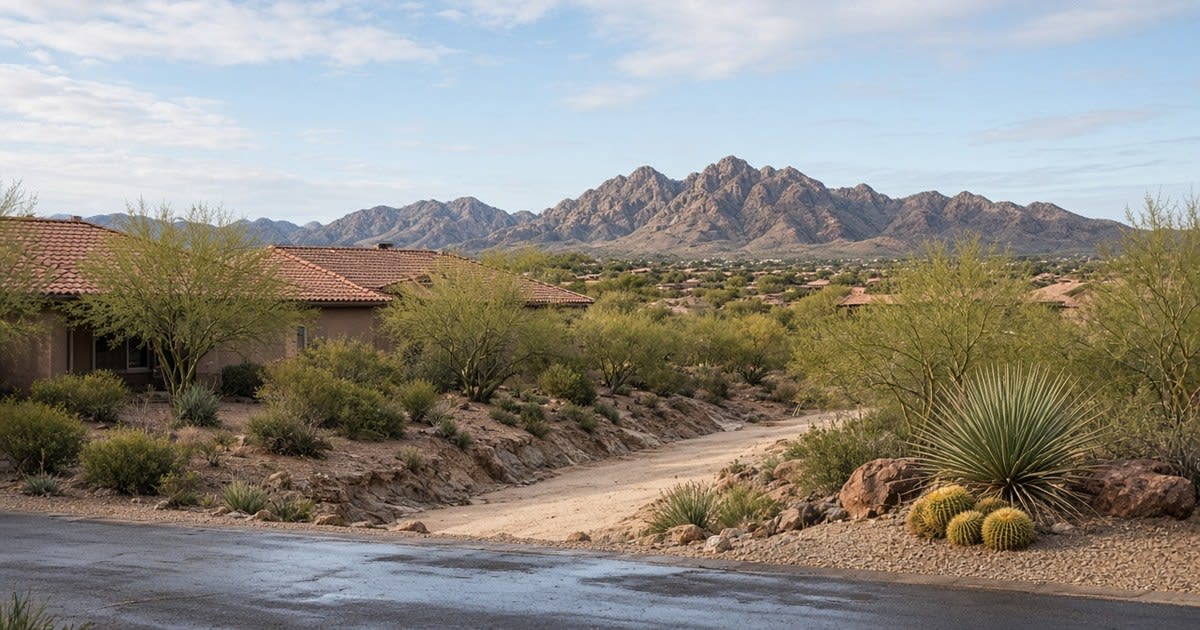


November in the Valley of the Sun feels gentle — patio weather, soft light for listing photos, and comfortable mornings for house hunting. It is also when Pacific storm systems start bringing more meaningful rain to the desert. For prospective homeowners, buyers, and sellers, that shift is a useful reminder: many Phoenix-area homes sit near washes, floodplains, and drainage corridors that look quiet most of the year and can carry water quickly when storms arrive.
Here is what to understand about Phoenix flood zones, washes, and winter-storm readiness before you buy, sell, or settle in for the cooler months.
Why Phoenix Flood Zones Matter as Winter Approaches
Much of the metro sits on an alluvial desert floor crossed by rivers, canals, and washes. Channels that stay dry for months can concentrate runoff fast during a winter storm. That is why floodplain maps belong in due diligence alongside the roof, HVAC, and inspection report.
According to the Flood Control District of Maricopa County, a floodplain is land subject to inundation by a flood with a one-percent chance of being equaled or exceeded in any given year — often called the 100-year flood. On a FEMA Flood Insurance Rate Map (FIRM), that high-risk area is a Special Flood Hazard Area. New habitable construction in a mapped floodplain must generally be built so the lowest floor sits above the Base Flood Elevation.
The District also notes that flood hazards can exist where studies are incomplete, and mapped limits can change as new data, storms, or development alter how water moves. “We have never flooded here” is not the same as “this lot has no flood risk.”
Washes Are Part of Valley Living — Ask the Right Questions
Washes are the desert’s natural drainage paths. Neighborhoods across Phoenix, Scottsdale, Mesa, Chandler, Gilbert, Peoria, and the West Valley are designed around them. Buying near a wash can mean open views — and questions about bank stability, setbacks, and stormwater after a downpour.
Maricopa County planning guidance explains that proximity depends on wash size and flow. In general, stay away from major washes; for proposed structures near minor washes, a common rule of thumb is about 20 feet of separation, with bank protection and engineered review required in tighter situations. Exact rules are site-specific through local plan review.
When you tour a home, walk the yard after rain if you can, look for erosion or debris lines, and ask whether the lot drains toward the foundation or a designed outfall. Sellers who keep grading and drainage in good shape give buyers fewer surprises.
Flood Insurance: Required in High-Risk Zones, Worth Asking Everywhere
If a lender determines a property sits in a FEMA 100-year floodplain, flood insurance is typically required for a mortgage. Standard homeowners policies generally do not cover flood damage. Coverage is available through the National Flood Insurance Program (NFIP) and, in some markets, private carriers — talk with a licensed insurance professional about the property.
Two timing points matter heading into winter:
· There is usually a 30-day waiting period before a new NFIP policy becomes effective, with limited exceptions — including when coverage is purchased in connection with a loan closing.
· Flood risk is not limited to shaded high-risk zones. FloodSmart reports that from 2014 through 2024 nearly one-third of NFIP claims came from outside current high-risk flood areas.
If you disagree with a lender’s determination, FEMA offers review options, and owners whose natural ground elevation sits above the mapped Base Flood Elevation may pursue a Letter of Map Amendment. The Flood Control District can complete a no-fee flood hazard information request for many Maricopa County properties; cities such as Phoenix, Scottsdale, Tempe, and Glendale run their own floodplain programs, so confirm which agency covers the address.
A Practical November Checklist
· Look up the property on FEMA flood maps and, where available, the County floodplain viewer
· Ask which floodplain agency covers the city or unincorporated area
· Note any wash, drainage easement, or retention basin on the survey or plat
· Confirm whether the mortgage will require flood insurance and get premium quotes early
· Review elevation certificates or LOMA paperwork if the seller has them
· Clear debris from yard drains, scuppers, and gutters before winter storms
What This Means for Phoenix Buyers and Sellers
For buyers, November is a comfortable month to tour homes — and a smart month to put drainage and flood-zone questions on the same list as roof age and air conditioning. Understanding washes and maps early keeps escrow smoother and helps you budget for insurance.
For sellers, gathering flood-zone details, elevation documents, and a clear description of how the lot drains can reduce lender friction. Clean drainage also photographs well in the Valley’s soft winter light.
A local real estate professional who knows Phoenix-area neighborhoods can help you interpret what the maps mean for a specific address and keep the conversation practical. Reach out to talk through the homes you are considering — and to make sure winter storms are something your next chapter is ready for.